
When Less Is Just Less
Create for yourself, not the technology

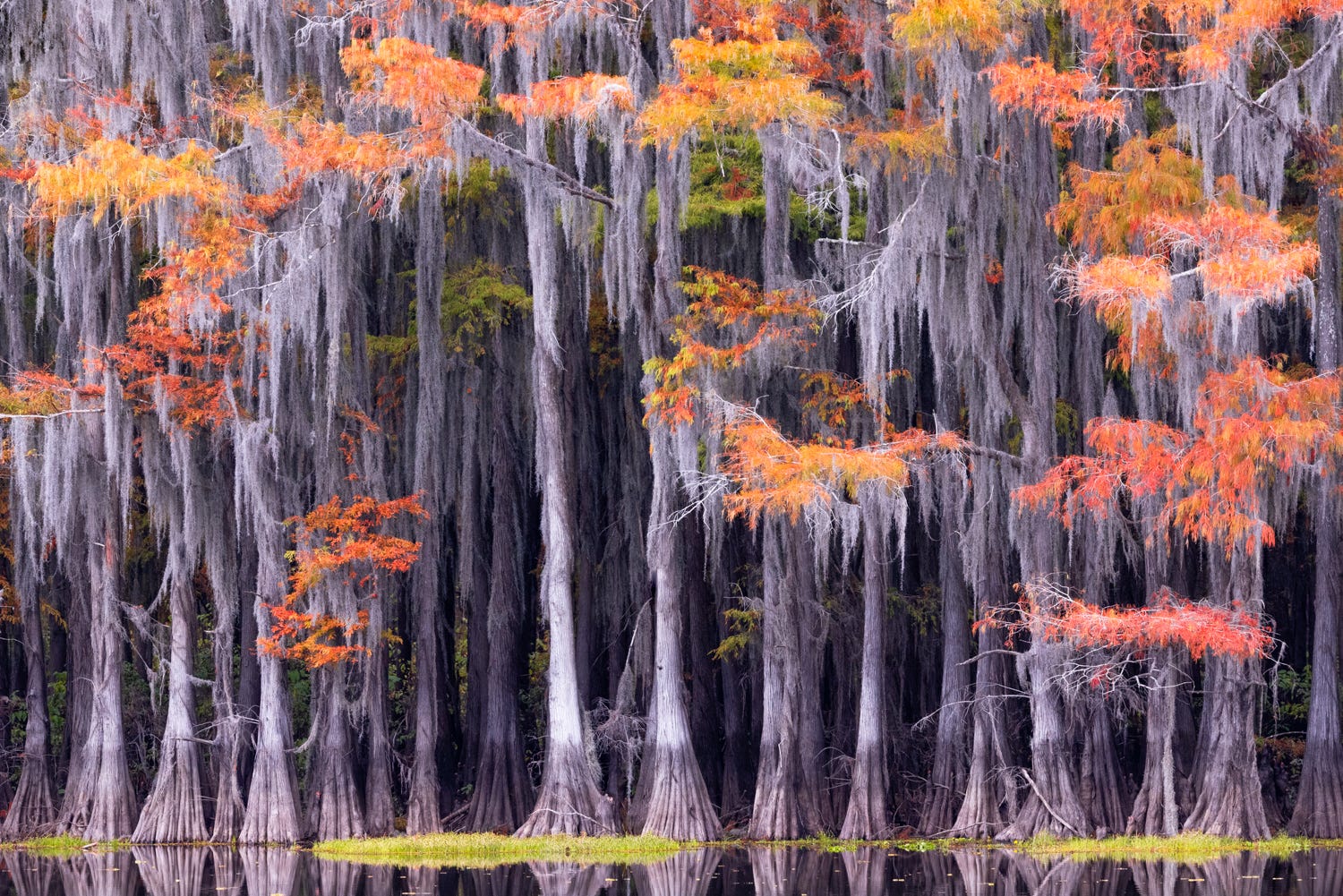
“Ghostly Manes” A compressed, telephoto expression of the bald cypress tress of Caddo Lake, Texas in autumn.
The smartphone screen has quietly become the primary curator of photography, and in the process, it’s threatening to distort our visual expression.
Take a look at what dominates the social media feeds: simple subjects, bold geometry, and immediate, eye-catching visual impact. This isn’t an accident. It’s a surrender.
According to Comscore, roughly 96 percent of time spent with photo content happens on mobile devices. That’s time spent, not an actual headcount of images. It’s also all photos, not necessarily those taken by photographers. But it’s still the closest proxy data we have for where people are actually looking at pictures, and it’s overwhelmingly on phones.
Photographers sense this, whether consciously or not. As a result, they’ve started creating for the devices themselves: stripping away density, abandoning compositional complexity, and shying away from the micro-details since an intricate visual narrative doesn’t translate well on a phone.
I’m guilty of this myself, and it’s a dangerous game. We’ve basically surrendered artistic agency and personal vision to the technological whims of the day.
We are taught early on that there is a quiet virtue, a refined aesthetic purity, in stripping an image down to its barest elements. And that holds true when simplicity serves the work itself, driven by artistic intent rather than a quiet surrender to the technology on which it will be viewed. Less is more is a classic design ethos that works beautifully when it’s applied for its own sake. But when applied only for the sake of a device that fits conveniently in your hand, less is often just… well, less.
There is tremendous, understated aesthetic value in visual complexity. In fact, learning how to organize dense, multi-layered visual narratives is usually the next evolutionary step after a photographer masters the art of simplification. True mastery isn’t about avoiding complexity: it’s about holding chaos in perfect, deliberate balance.
Create images the way you saw them, felt them, and experienced them, whether in a quiet, clean simplicity or in rich, beautiful complexity. Never pander to the current limits of technology, because today’s dominant platforms and pocket-sized screens may just be a passing fad. After all, tomorrow’s breakthroughs in viewing technology might very well reward deep detail and complex vision. In other words, you could be making images today for a technology that will be obsolete tomorrow.
Stay true to your vision. Technology and media can and will change, but a genuine personal vision endures.
Podcast: Photography and Life on Mars
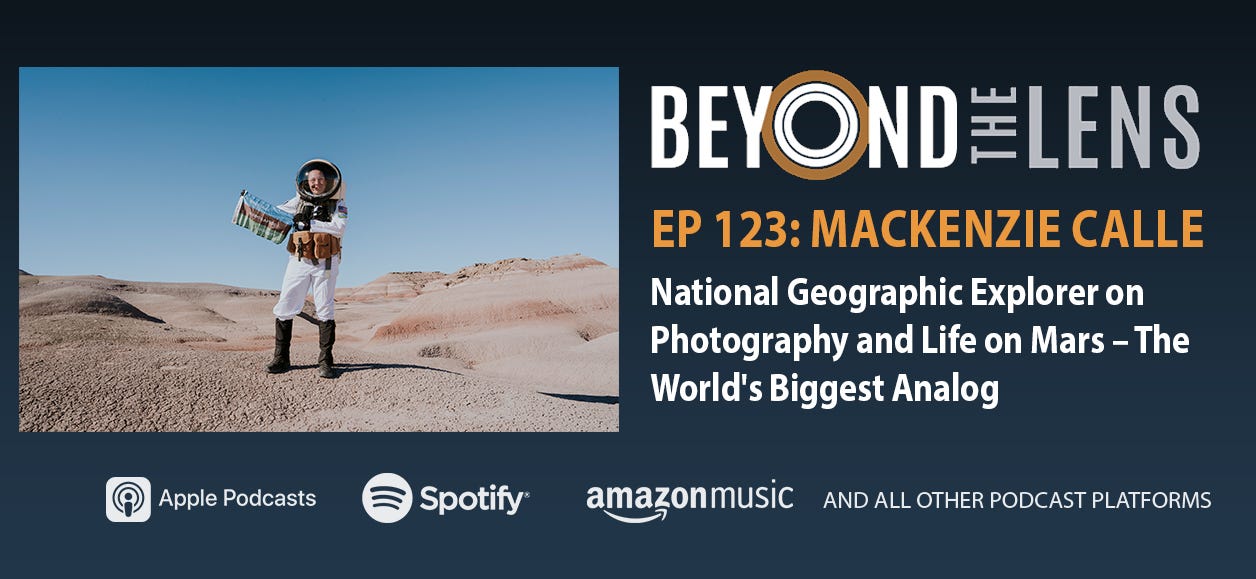
On the latest episode of Beyond The Lens, Richard and National Geographic Explorer and photographer, MacKenzie Calle talk about photography, life, and traveling to Mars, the July 2026 National Geographic cover photo, and the World's Biggest Analog, funded and made possible by the National Geographic Society.
Listen for more:
Latest BTL Episodes (Links to Apple Podcasts)
As I mentioned, all links are to Apple Podcasts but you can search for Beyond The Lens with Richard Bernabe on Spotify or any other podcast app.
Follow Me on Instagram
You can follow here for art and adventure….
Excellent and spot on..Technology is out dated before it we can upload the latest version..