
The Frame
The Frame Is Not a Border

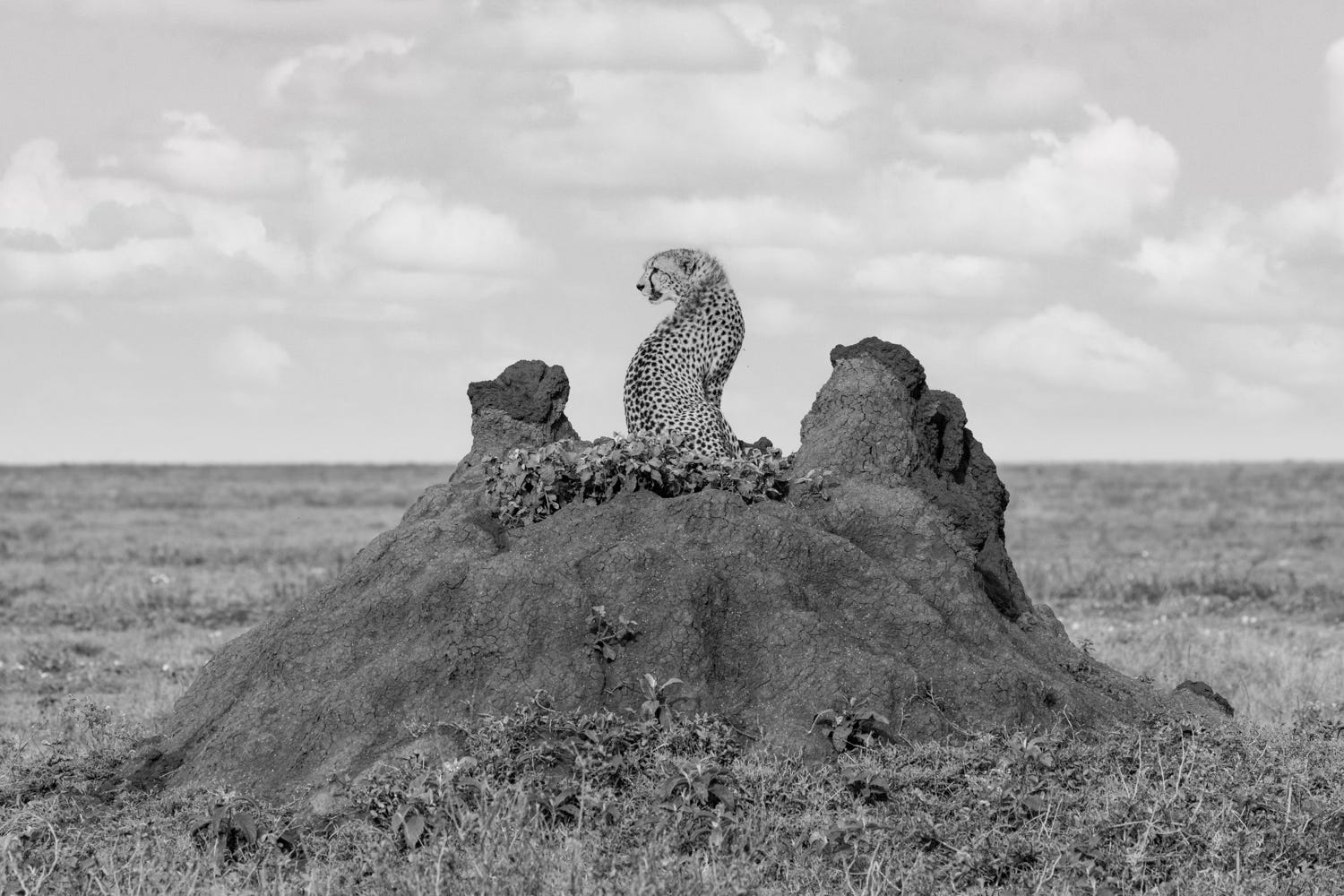
In an upcoming Beyond The Lens (Apple, Spotify) “Books That Matter” episode, I break down and discuss one of photography’s most important and underrated texts: John Szarkowski’s The Photographer’s Eye, published in 1966. It’s the kind of book that doesn’t shout. It whispers. And if you’re paying attention, it changes how you see everything.
The chapter on The Frame stopped me cold the first time I read it. Not because it was complicated. Because it was obvious in the way that only true things are, the kind of obvious that makes you wonder why no one ever said it plainly before.
Most photographers think of the frame as a border. A container. The edge of the picture.
Szarkowski says the frame is the picture.
That’s not a subtle distinction. It’s a complete reversal of how most of us were taught to think about composition. We talk about “filling the frame,” about “working within the frame,” as if the frame is a room we’ve been assigned and our job is to arrange the furniture. But Szarkowski says the act of framing is the act of seeing. They’re not separate. You don’t see something and then frame it. The framing is the seeing.
Every time you raise a camera, you’re doing something that sounds ordinary but is actually radical. You’re taking a world that has no edges, continuous, chaotic, indifferent, and saying: this. This slice. This moment. This relationship between these particular things. The rest of the world? Excluded. Gone. Irrelevant, at least for now.
That’s not composition in the technical sense. That’s judgment. That’s an argument about what matters.
And here’s where photographers get into trouble. Most weak photographs aren’t weak because of bad light or missed focus or inferior gear. They’re weak because the photographer didn’t fully commit to the frame. They hedged. They included the interesting thing and the thing next to it, just in case. They left visual maybes inside the borders, elements that don’t support the idea, don’t create tension, don’t do anything except water down the message. The frame becomes a compromise, and the photograph reads like one.
Strong photographs are different. They feel clean and inevitable, like the only possible version of that moment. You can’t imagine them cropped differently. You can’t imagine anything added or moved. They have the quiet authority of a decision fully made.
Szarkowski understood this because he understood photography’s fundamental nature: unlike painting, which builds up from nothing, photography works by subtraction. You begin with everything, the entire visible world in front of the lens, and you take away everything until only what’s essential remains. The frame is the instrument of that removal.
So here’s a question I’ve used for years, something I now ask myself before making an image:
What can I remove?
Not what can I add. Not what can I move. What can I remove. Take a step left and remove the distracting element from your frame. Lower your angle and replace a cluttered background with open sky.
The frame is not passive. It’s not a recording device. It’s an act of exclusion, and exclusion is where clarity lives. The edges of a photograph don’t just contain the subject. They define it, isolate it, give it weight it couldn’t carry in the middle of the world’s noise. They create relationships between things that would never notice each other otherwise. They impose structure on chaos, not by adding order, but by removing everything that isn’t order.
In a photography culture that rewards more: more gear, more megapixels, more images, more content, Szarkowski’s frame asks for the opposite.
Less.
Less clutter. Less hedging. Less of the almost-interesting thing you kept because you weren’t sure. Because in photography, as in most things that matter, what you leave out isn’t the sacrifice. It’s often the whole point.
New Podcast Episode: Louie Schwartzberg
Louie Schwartzberg is a filmmaker who has spent more than four decades revealing the hidden beauty of the world around us. A pioneer in time-lapse, macro, and high-speed cinematography, his work has appeared in National Geographic, Netflix, and DisneyNature films and series including Fantastic Fungi, Moving Art, and Wings of Life, helping millions see nature and time itself in an entirely new way.
In this episode, we explore:
• How Louie pioneered modern time-lapse cinematography
• Why awe and gratitude can reshape your outlook on life
• The hidden intelligence and interconnectedness of nature
• Creativity, patience, and storytelling through film
• How slowing down helps us see what matters most
Here’s to Truth, Adventure, and Passion
This is how I’ve always felt. Thanks to you and Louie for expressing it so succinctly.
So simple, but so true.