
The Creative Process in Photography: A Methodology
A Methodology

The Creative Process
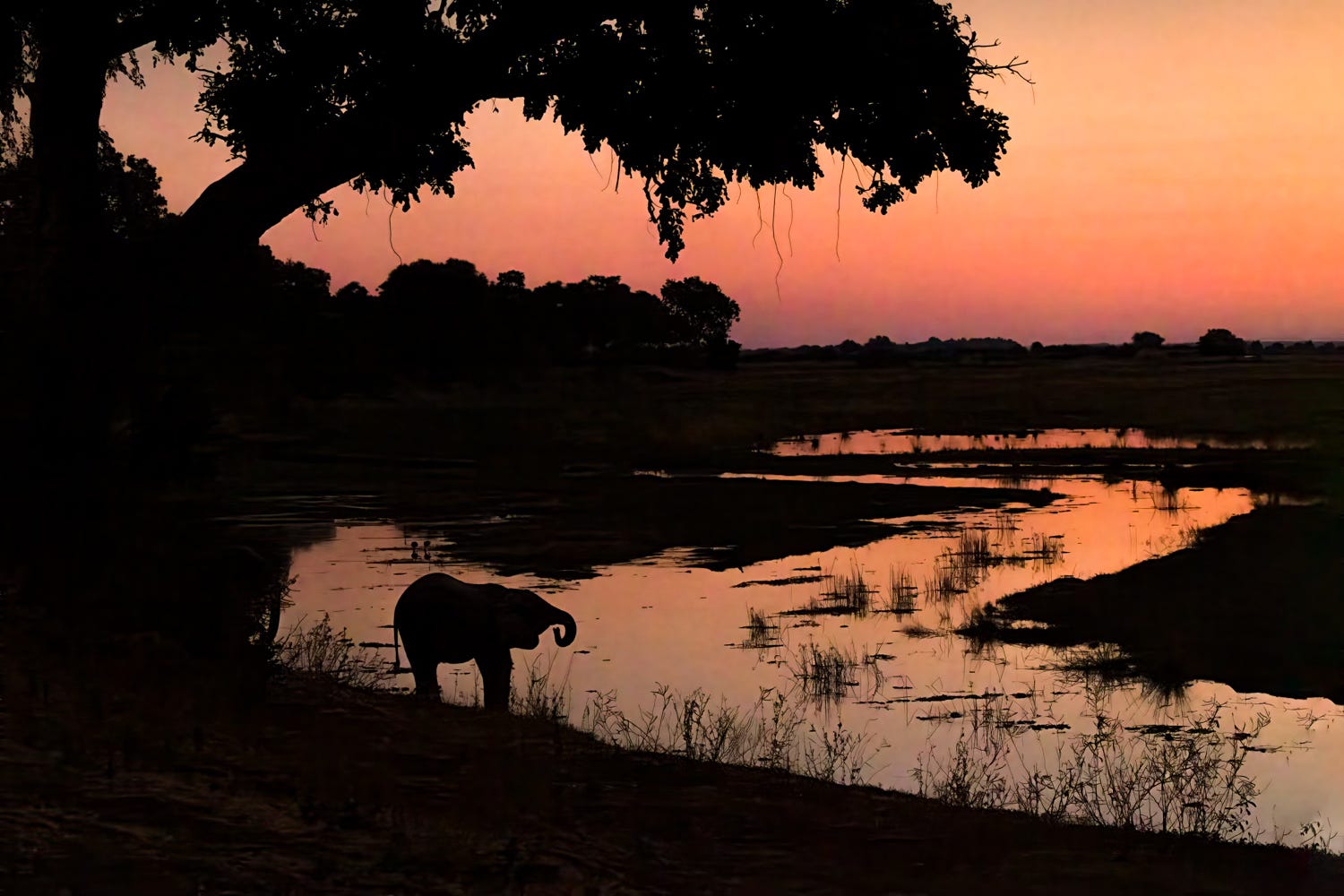
Sunset glow on a side channel of the Zambezi River, Mana Pools National Park, Zimbabwe. Canon EOS R5, Canon 100-500mm lens @ 100mm, 1/160 second @ f/11, ISO 4000
When it comes to photography and the creative process, I fully embrace the principles of brain lateralization, the idea that the left and right hemispheres of our brains process information in fundamentally different ways. The right hemisphere is where we feel emotion, engage the imagination, and dream. The left is where we employ language, reason, and logic.
Most of you are already familiar with this concept, but understanding how to harness it can transform your photography. Although the popular left-brain/right-brain distinction is considered a gross oversimplification in modern nuerosceince, it still remains a useful metaphor for understanding how analytical and intuitive modes of attention influence the way we see and create.
Here is the key point: our conscious mind can only process information from one hemisphere at a time. We shift back and forth easily, but that constant switching is not optimal. Eventually, one hemisphere dominates, deciding what enters our consciousness and what gets filtered out, including the visual information transmitted from our eyes via the optic nerve. More often than not, the dominant left brain wins, relegating the right hemisphere to a more passive role.
Occasionally, the right brain slips something past the gatekeeper, usually when the left brain grows bored or distracted. In those brief moments, emotional and visual impressions flow freely. Fleeting images and associations move through our awareness before the rational mind snaps back into control and restores order.
For photographers, the right hemisphere is where the magic begins. It is where the creative spark ignites and where we form an intuitive, emotional connection to the world we see. The left hemisphere, meanwhile, handles the necessary mechanics: exposure, perspective, and composition. I am convinced composition is largely a deliberate cognitive process, though I admit I often trust what simply feels right.
Here is the essential truth: if you want to move others with your images, you must first be moved yourself. To evoke emotion through your photography, you need a genuine emotional connection to your subject. How can viewers feel power, awe, tranquility, melancholy, or heartache in your work if you felt nothing while standing there and witnessing the scene?
When I am in the field, I often forget the camera entirely. I am not thinking about composition, light, or the pressure to make an image. I am fully immersed in the experience and present in the moment. I am not searching for anything or expecting results. Instead, I cultivate a state of openness in which something can find me.
The late fine-art photographer Ruth Bernhard described this beautifully: “I never look for a photograph. The photograph finds me and says, ‘I’m here!’ and I say, ‘Yes, I see you. I hear you!’”
The secret is remaining open and receptive while keeping your thoughts passive. This allows the right brain to temporarily take the lead. The biggest mistake is entering the field with preconceived ideas or pressure to create something specific. Expectations only reassert left-brain dominance and lead to clichés, tired concepts, and emotionally hollow results.
When a subject genuinely speaks to me, I resist the urge to immediately grab the camera and start shooting. Too often, I have sabotaged the process by firing away too quickly. Those sessions almost always disappoint. Later, staring at the screen, I find myself thinking, “What was I thinking?” Removed from the emotional intensity of the moment, the images fail to deliver. This is exactly how your viewers will feel, since they are equally separated from the experience.
Instead, pause and ask yourself a few fundamental questions. Why do I want to photograph this? What is drawing me to this subject or scene? What emotion am I feeling, and what do I want to express? What specific elements are contributing to that response? When you put these answers into words, they become actionable. Language belongs to the left brain, and verbalization initiates the shift from emotional response to deliberate execution.
What emotion did you identify? Tranquility? Strength? Power? What elements created it? The movement of water? A foreboding sky? The curve of a shoreline?
Now ask what tools will best amplify those elements. Those tools live in your camera bag and in your accumulated technical knowledge. Where is the focal point? Does the scene call for a wide-angle view that integrates subject and environment, or would a more simplified approach communicate more clearly?
This is conceptualization, pure left-brain thinking. If you remain in right-brain intuition without crossing over to execution, your images may feel meaningful to you but communicate little to others. Emotional responses must be translated into visual language viewers can understand and feel. On the other hand, if you work exclusively from the left brain, never establishing an emotional connection to begin with, you will create technically refined but emotionally sterile images that leave viewers cold.
True creativity requires synthesis between intuition and intention. Without the emotional spark of the right brain, images become polished but soulless. Without the discipline of the left brain, they remain deeply felt but inaccessible. The magic lives between feeling and thinking, between discovery and translation, between being moved and moving others. Master that balance, and your photography becomes more than documentation. It becomes work that resonates, images that linger, and art that allows others to feel what you felt in that singular moment.
True creative synthesis depends on both.
Here’s to Truth, Adventure, and Passion…

Wonderful commentary on seeing with the mind, rather than through the lens.
Master class 💎