
Shoot To Thrill
Cameras, Guns, and LInguistics

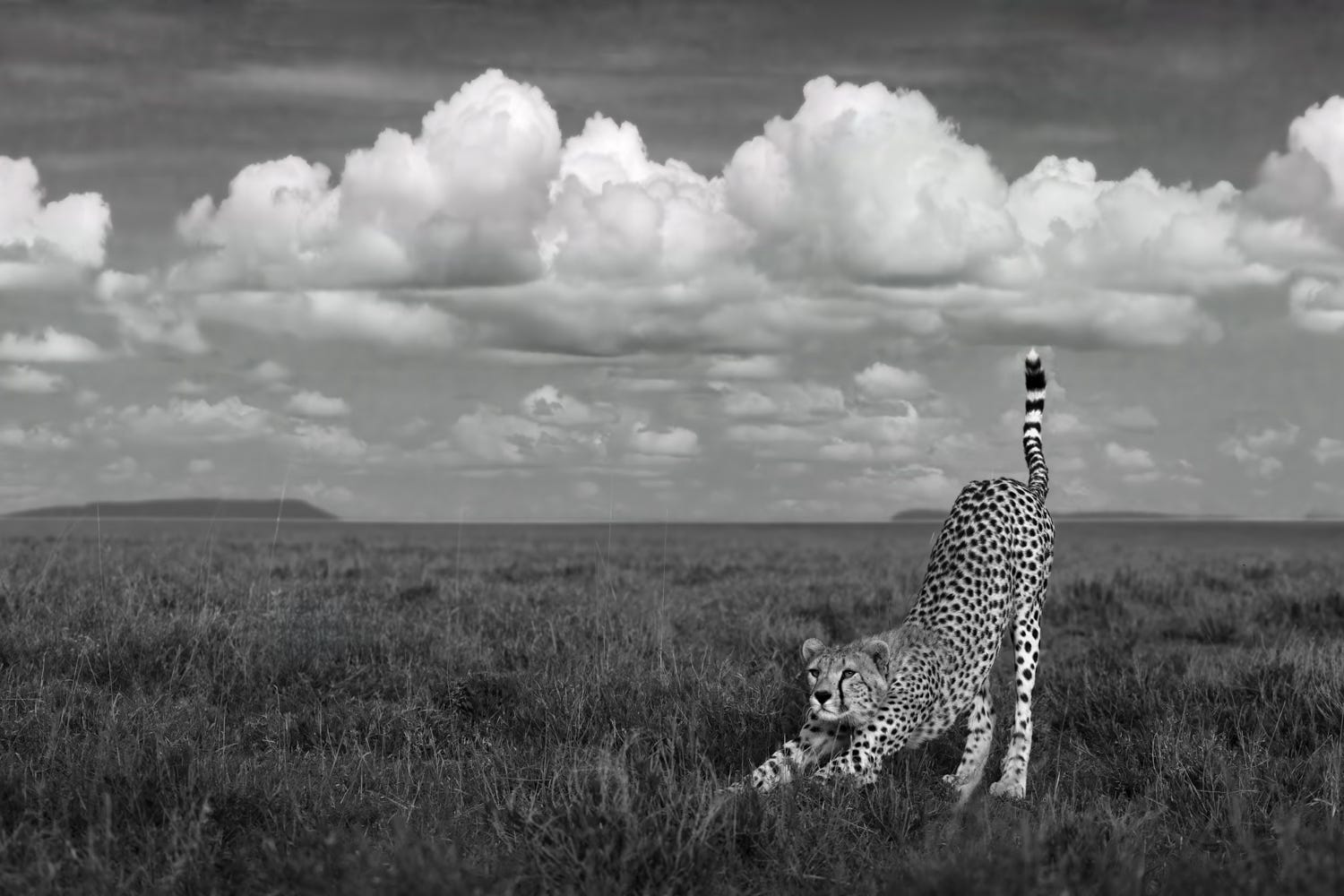
The following essay was written at least ten years ago and published on my now-defunct blog. Some of you might remember it, some not. Either way, resharing here for your entertainment.
"When this is in your hands, you are the center of the universe. Not that anything else exists, it certainly does. You are important, this thing empowers you to do whatever the hell you want." – Mel DiGiacomo, photojournalist
“On the barrel, pretty white letters spelled out PARTY STARTER.” – Ilona Andrews, Gunmetal Magic
On the tediously long flight from Washington D.C. to Johannesburg, I was seated among a small group of middle-aged white men decked out in the latest camouflaged fashions. They were, as they say, all in. The affected clothing items and accoutrements included, but were not limited to, jackets, baseball caps, handbags, boots, eyeglass cases, phone cases, one eye patch, and a tee-shirt emblazoned in block letters:
GUN CONTROL IS BEING ABLE TO HIT YOUR TARGET
A hunting party, to be sure.
At this realization, I was for the briefest of moments shocked that these men were traveling across a vast ocean to kill the same animals I’d come to photograph. I was also somewhat shocked at my naïveté, since African hunting safaris have a much longer history and steeper tradition than wildlife photography. Grainy black and white photographs of a bespectacled Teddy Roosevelt, rifle in hand, grinning over the corpse of some poor Cape buffalo, come immediately to mind.
I cast no judgment on legal hunting for sustenance or as a wildlife management tool, but killing for sport, trophy, or ego sickens me, particularly when the victims are African megafauna in precipitous decline.
Either way, I have zero interest in participating myself. I’ve spoken to many wildlife photographers who are former hunters, and they’ve all intimated that the primal thrill of the kill is the same. Only a good wildlife image is much more of a challenge than a kill shot. With photography, the human predatory instinct is still propitiated but without the blood, guts, and guilt. It’s also more of what I would consider a sporting proposition. Both characters in the drama can walk away from the encounter alive and well.
Still, in many ways, photography and firearms are deeply intertwined, with language being the most common bond. A camera is said to be fired, and so is a flash gun. A collection of lenses is often referred to as an arsenal, and all lenses, of course, have a barrel. Super telephoto lenses are big guns, while small fully automatic, pocket-sized cameras are point-and-shoot. So without even having to mention headshot, you should already be getting my drift.
The primary complication lies with the ambiguity of the words shoot and shot. A portrait photographer’s Twitter bio might include “I shoot people,” a joke that ceased being funny long ago if for no other reason than it’s breathtakingly stale and unoriginal. If they go on to say that they can legally cut people’s heads off, well, then that makes it at least fractionally funnier.
The word shot is a cute, amputated form of snapshot, borrowed yet again from the culture of weaponry and born in the early 19th-century usage, “a quick shot with a gun, without aim, at a fast-moving target.” Some photographers, I fear, might feel this definition hits a bit too close to home.
I use the words shoot and shot from time to time, but I try to do so as infrequently as possible. Not because of their possible violent undertones, but because I find them inelegant and crude. As a substitute for shot, I prefer image or photo.
Image is modern and snazzy, entirely appropriate for smartphones and the digital age.
Stretching photo all the way out into photograph feels somewhat old fashioned and implies, at least to me, a tangible print that you can hold in your hands. I’ve modified my opinion on the word recently, however, in the emerging age of generative AI. Only a camera can make a photograph, while an image can be created by a camera, a computer, or an algorithm. That distinction now matters more than it used to, and I think the language is going to have to do real work to make that distinction.
Picture is too broad, and the slang pic should always be avoided if you are older than 25 or if used outside the context of an online chat or text. Under no circumstances should it ever be verbalized. Capture, used as either a noun or verb, is steadily gaining in popularity among photographers but has never fully caught on with me. Epic capture or I captured a raging sunset last night is either too disconnected from photography or far too hip for its own good.
It’s time we found some new terminology.
All of which was rattling around in my head as I disembarked at O.R. Tambo International Airport, where I’d been warned by a U.S. State Department bulletin to watch for thieves and muggers posing as taxi operators.
As I carefully deliberated over my transportation options, a friendly young man approached and offered a ride to my hotel at a reasonable price. I searched his appearance for any subtle clues, a ridiculous and futile exercise, then followed him out to his car, which had an illuminated “taxi” sign perched on the rooftop. A very good sign indeed.
When he asked about the purpose of my visit, I cryptically replied, “Shooting animals,” just as he reached for my luggage and opened the trunk.
“Hunting?”
“Yeah, you could say that.”
Before the trunk was closed, I grabbed my oversized camera pack and said casually,
“No thanks, but I’d prefer to keep the guns up front with me.”
*****
You can search for Beyond The Lens with Richard Bernabe on Apple Podcasts, Spotify, or any other podcast app.
*****
Follow Me on Instagram
You can follow here. I’ll be in Chile and The Galapagos for the next few weeks.
Here’s to Truth, Adventure, and Passion
Thank you.
As usual, your gift of the written word matches your skill with your profession! You have a magical way of pulling in the reader. 🩷the end!