
Composition: Literal and Abstract Seeing, Notans, and Value Structure
You can't arrange what you can't see.

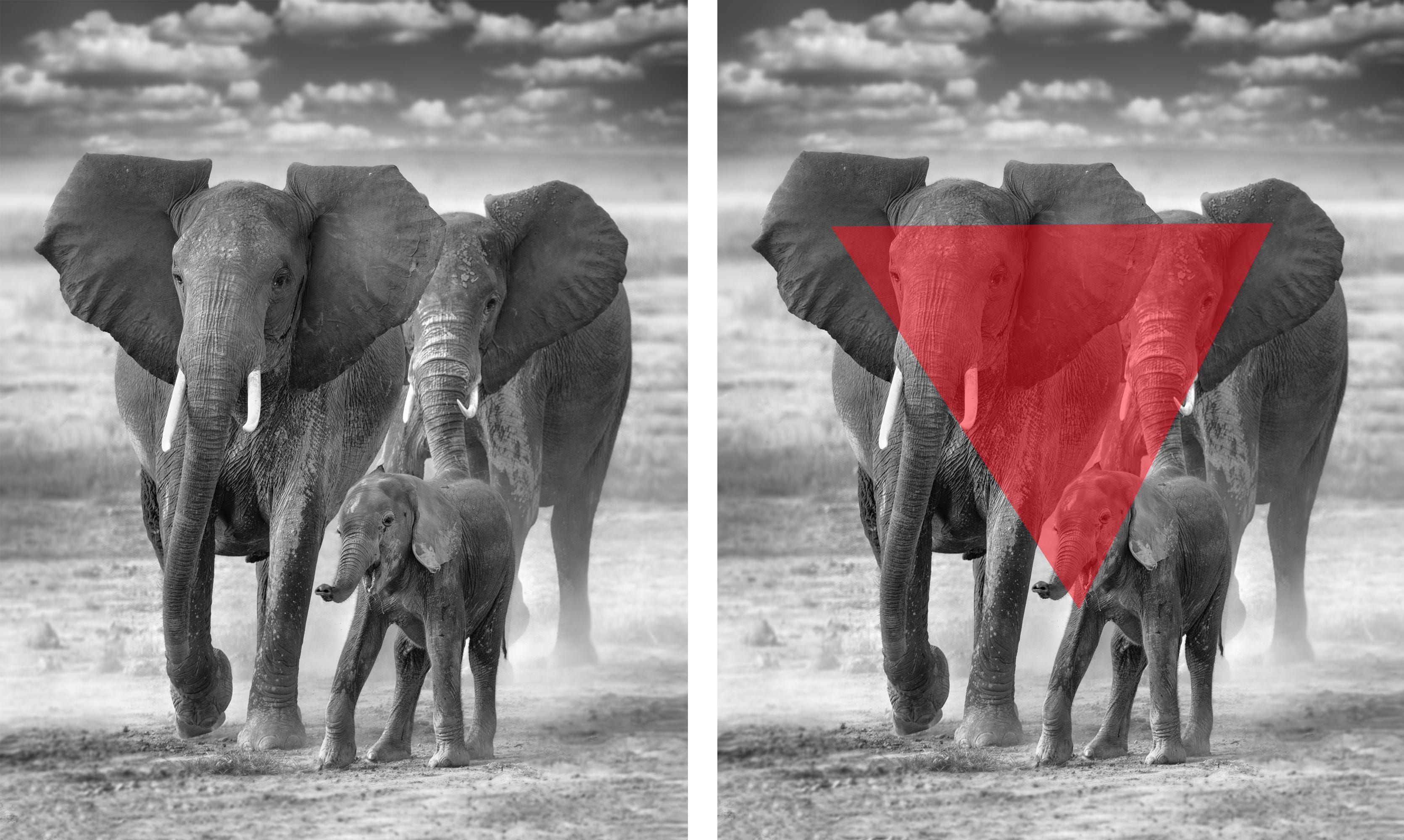
If I could give beginning photographers just one piece of advice for creating stronger compositions, one lever that moves everything else, it would be this: let go of the literal and embrace the abstract.
Let me explain.
Most beginners see only the literal elements of a scene. Mountains. Trees. Rocks. Elephants. A river. And that’s okay. It’s through these literal elements and subjects that we establish emotional connections to what we’re photographing and the core around which we build the image.
But the literal scene is the surface layer, and the surface layer is where everyone else is shooting too. The real compositional structure lurks below the surface: shapes, lines, space, patterns, and how all of that relates to the edges of the image frame. I’m not suggesting you go out and make abstract images, although that’s worthwhile work for its own sake. I’m asking you to see through the literal to the abstract skeletal bones beneath it.
How? Here’s one field-tested exercise I use with students, and it costs you nothing. Squint. Seriously. Squint just enough that the literal details dissolve and what remains are the structural geometry of the scene. The literal elements will flesh out the image later but for now, your focus is on architecture, not decoration.
Take the elephant images above. Faintly squint and the details of the family unit fades away and a triangle is revealed. That’s wasn’t an accident. Arranging your key visual elements into power shapes, triangles, diamonds, pyramids, circles, gives an image balance and order in a way that random groupings never will. But you can’t arrange what you can’t see.
Beyond shapes, there are virtual lines that can connect the most conspicuous visual elements. If diagonal, they create movement and visual tension as the eye unconsciously bounces back and forth between them. Repeating patterns can create movement too. And space holds everything together and provides balance and visual harmony
If you want a more formal framework for this, study the Japanese concept of Notan, which translates loosely as dark-light harmony. It’s the practice of reducing a scene to flat masses of dark and light, no color, no texture, no detail, and asking one question: does the design hold up when the literal is stripped away?
Painters call the broader discipline value structure, the organization of every tone from darkest dark to lightest light. Notan is simply value structure with the resolution cranked all the way down to two tones, and that’s what makes it such a ruthlessly effective test. If the arrangement of dark and light shapes is strong and balanced, the image is strong, and you can refine the midtones later in processing and printing. If not, no amount of gorgeous light or exotic subject matter will save it. Notan is essentially the squint test refined over several centuries.
If you’re struggling, here are two suggestions. First, try the squint test mentioned above. Second, reverse-engineer the masters. Pull up work from photographers and artists you admire and don’t ask “what is this a picture of?” Ask “what shapes and lines and underly geometry make this work?” Do that for twenty images every day and soon you’ill realize that you are seeing photographs and real scenes differently than ever before.
New Podcast Episode: Jeff Cable
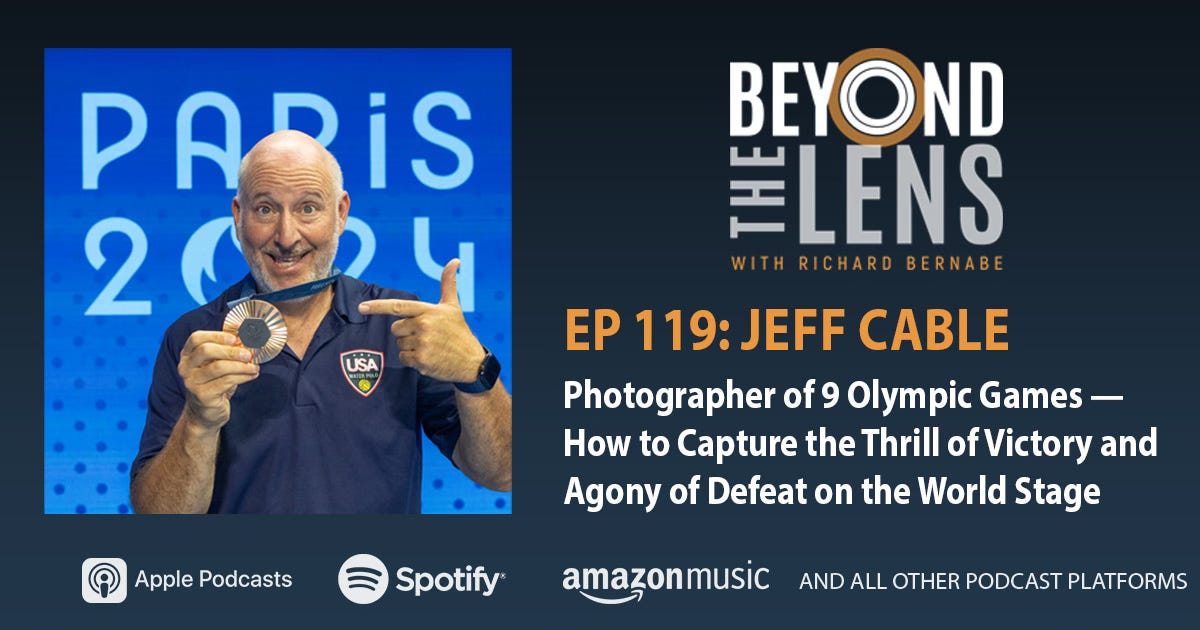
Jeff Cable has photographed the last nine Olympic Games for Team USA, from Beijing to Tokyo, Paris, and Milan. But he didn’t start there. For over 25 years he was a marketing executive, shooting on the side until 2016, when the side passion became the whole career.
In this episode, Jeff joins Richard to talk about the evolution of his photography career, making pictures on one of the largest stages in the world when the moment is unrepeatable and there’s no second chance to get the shot, and leading travel, nature, and wildlife photo tours around the world, from Costa Rica to Africa.
Learn more about Jeff at his website and highly-popular blog.
You can listen to this episode here:
Latest BTL Podcast Episodes (Links to Apple Podcasts)
As I mentioned, all links are to Apple Podcasts but you can search for Beyond The Lens with Richard Bernabe on Spotify or any other podcast app.
Follow Me on Instagram

You can follow here for art and adventure….
Thank you. My husband died on Christmas day and I have his camera that I am trying to learn how to use. I really appreciate all the helpful hints and ideas.
This is fascinating. Thank you!